IGCSE vs IB in India: A Parent’s Guide to Choosing the Right International Board
Priya Gunasekaran
02 Feb, 2026
0 Comments
2 Mins Read
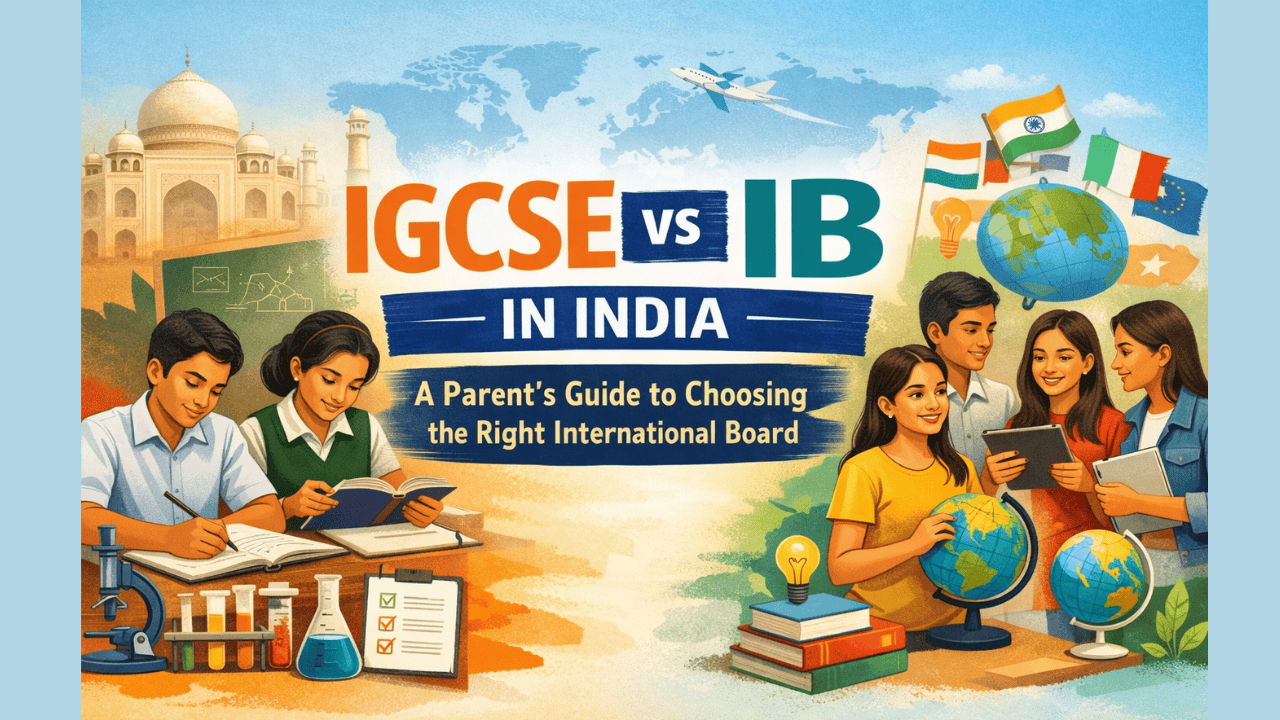
IGCSE vs IB in India: A Parent’s Guide to Choosing the Right International Board
Choosing the right school board is one of the most important decisions you’ll make for your child’s future. With international education gaining popularity in India, many parents find themselves confused between IGCSE and IB.
Both boards are globally recognised and offered by top international schools across India—but they are very different in philosophy, structure, and learning style.
This guide breaks down IGCSE vs IB in India in clear, practical terms to help you decide what truly suits your child.
IGCSE or IB, strong math is the foundation for both.
IGCSE (International General Certificate of Secondary Education) is an internationally benchmarked curriculum developed by Cambridge Assessment International Education.
Key Features of IGCSE
– Strong subject-based curriculum
– Wide choice of subjects (science, commerce, humanities, arts)
– Assessment through exams, coursework, or a combination
– Focus on conceptual understanding and application
Why Parents Choose IGCSE
– Smooth transition from CBSE/ICSE
– Structured syllabus with clear outcomes
– Easier academic shift for Indian competitive exams
– Accepted by universities worldwide
What Is IB?
International Baccalaureate (IB) is a holistic education system offered by the International Baccalaureate Organization.
IB is not just one programme it includes:
– PYP (Primary Years Programme)
– MYP (Middle Years Programme)
– DP (Diploma Programme – Grades 11 & 12)
Key Features of IB
– Inquiry-based and student-led learning
– Emphasis on critical thinking and research
– Interdisciplinary approach
– Focus on global citizenship and life skills
Why Parents Choose IB
– Excellent preparation for global universities
– Develops independent, confident learners
– Encourages creativity, reflection, and leadership
– Highly respected by Ivy League and top global institutions
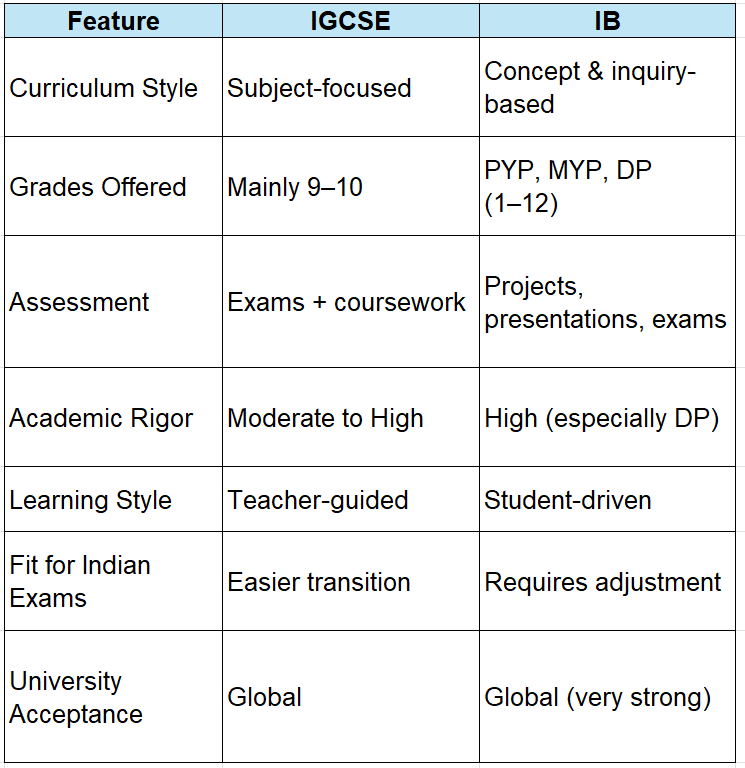
IGCSE vs IB: Quick Comparison for Indian Parents
Which Board Is Better for Your Child?
Choose IGCSE if Your Child:
✔ Prefers structured learning ✔ Is exam-oriented ✔ May later shift to CBSE, ICSE, or Indian entrance exams ✔ Needs clarity and academic stability
Choose IB if Your Child:
✔ Enjoys asking questions and exploring ideas ✔ Learns well through projects and discussions ✔ Plans to study abroad ✔ Is self-motivated and organised
Cost & Availability in India
Both IGCSE and IB schools are usually premium international schools in India.
– IGCSE schools are more widely available across cities
– IB schools are fewer and usually more expensive
– IB Diploma years (Grades 11–12) can be particularly demanding—academically and financially
University Recognition
Both boards are widely accepted by universities in:
India
UK
USA
Canada
Australia
Europe
However:
– IGCSE + IB DP is a popular combination
– IB DP is often viewed as more rigorous by top global universities
Final Verdict: IGCSE or IB?
There is no one-size-fits-all answer.
– IGCSE offers flexibility, structure, and a smoother Indian context
– IB offers depth, global exposure, and future-ready skills
The best choice depends on your child’s learning style, personality, and long-term goals, not just the board’s reputation.
Pro Tip for Parents
Before deciding:
– Visit schools
– Speak to teachers and current parents
– Understand workload expectations
– Assess how your child handles pressure and independence
IGCSE or IB, strong math is the foundation for both.
Priya, a mother of two, understands the value of a strong foundation in Computer Science from an early age. With a keen interest in technology and a passion for researching parenting techniques, she believes that the most effective way for children to retain knowledge is by making learning fun and engaging. Priya, on the other hand, works as a Content Writer at Eduseed, contributing to educational content that supports these goals.