


Priya Gunasekaran
- 16 Feb, 2026
- 0 Comments
- 2 Mins Read
How Micro-Learning Is Changing the Way Students Study
In today’s fast-paced digital world, children are growing up surrounded by smartphones, tablets, and instant information. Their way of learning is evolving and so should our understanding of education. One of the biggest changes in modern learning is micro-learning.
But what exactly is micro-learning, and why should parents care?
Let’s explore how this powerful approach is reshaping the way students study.
What Is Micro-Learning?
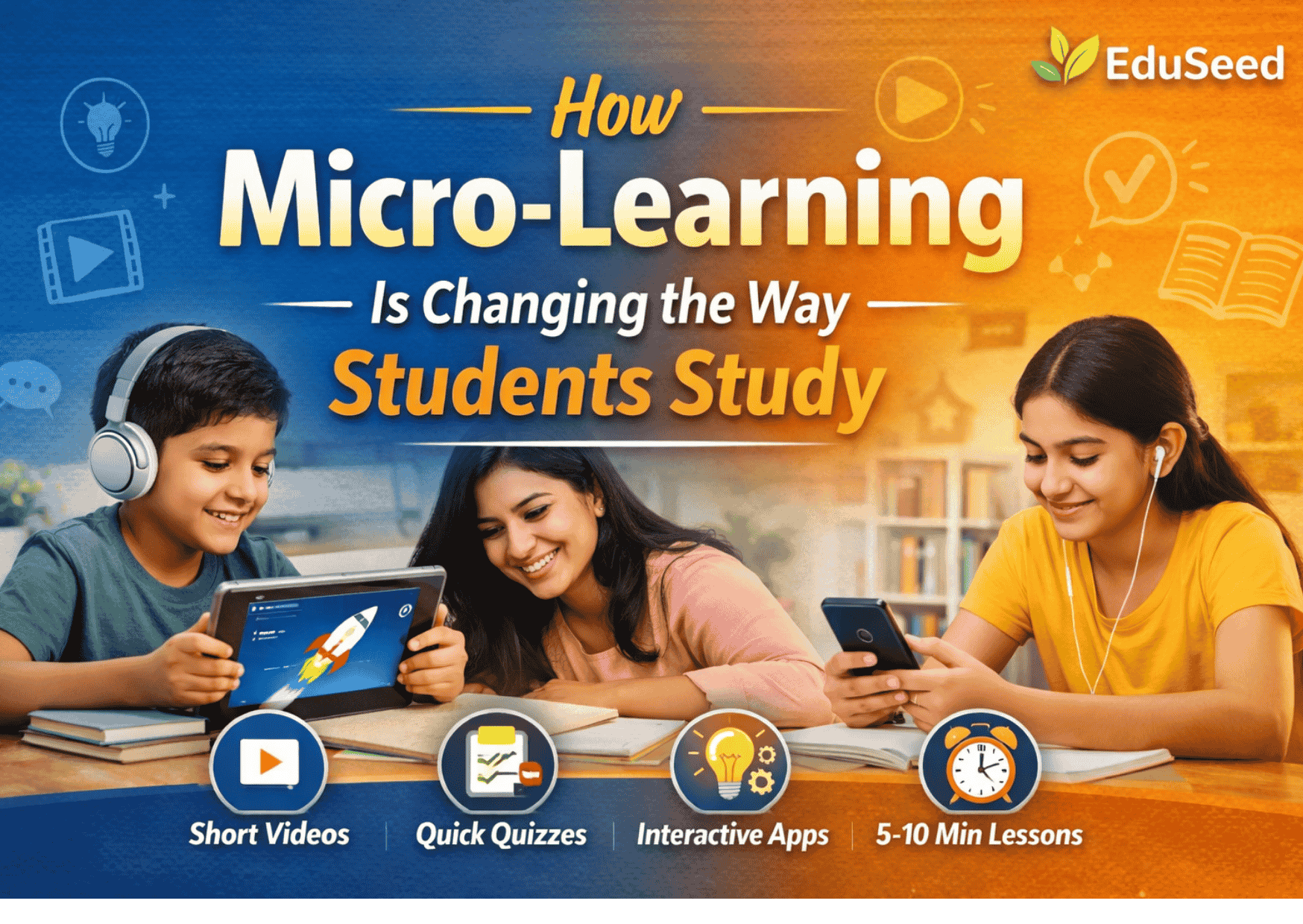
Micro-learning is a method of teaching that delivers information in small, focused, and easy-to-understand lessons. Instead of long lectures or heavy textbooks, children learn through:
– Short videos
– Quick quizzes
– Infographics
– Interactive apps
– 5–10 minute learning modules
These “bite-sized” lessons focus on one topic at a time, making learning simpler and more engaging.
Why Traditional Learning Alone Is No Longer Enough?
Traditional classroom learning plays an important role, but many students today struggle with:
– Short attention spans
– Information overload
– Exam pressure
– Difficulty revising large portions
Long study sessions can often feel overwhelming, especially for young learners. As a result, children may lose interest or confidence.
Micro-learning helps solve these problems by making learning manageable and stress-free.
How Micro-Learning Helps Your Child Learn Better?
1.Improves Focus and Concentration
Short lessons match a child’s natural attention span. When learning is quick and targeted, children stay focused and absorb information more effectively.
2. Makes Learning Fun and Interactive
With videos, animations, and quizzes, micro-learning feels more like exploration than homework. This keeps children motivated and curious.
3. Encourages Regular Revision
Because lessons are short, students can revise daily without feeling burdened. Regular revision strengthens memory and understanding.
4. Builds Confidence
Completing small lessons gives children a sense of achievement. Over time, this boosts their confidence and willingness to learn.
5. Fits into Busy Schedules
Whether between school and tuition or during travel time, micro-learning allows children to study anytime, anywhere.
The Role of Parents in Micro-Learning
Parents play a crucial role in guiding children’s learning habits. Here’s how you can support micro-learning at home:
1. Create a Learning Routine
Encourage your child to spend 15–20 minutes daily on focused learning sessions instead of long, tiring study hours.
2. Choose Quality Learning Platforms
Not all online content is educational. Select trusted platforms like eduSeed that offer structured, meaningful micro-learning resources.
3. Discuss What They Learn
Ask simple questions like:
– “What did you learn today?”
– “Can you explain it to me?”
This reinforces understanding and builds communication skills.
4. Balance Screen Time
Ensure that digital learning is balanced with physical activity, reading, and family time.
Micro-Learning and the Future of Education
The future of education is flexible, personalized, and student-centered. Micro-learning prepares children for this future by helping them:
– Learn independently
– Manage time effectively
– Adapt to new technologies
– Develop lifelong learning habits
As industries and careers evolve, the ability to learn continuously will become more important than memorizing facts.
Why EduSeed Supports Smart Learning
At eduSeed, we believe that education should be simple, meaningful, and accessible. By integrating micro-learning into our programs, we help students understand concepts clearly, revise effectively, and grow confidently.
Our goal is not just academic success but the overall development of every child.
Final Thoughts for Parents
Every child learns differently. As parents, your encouragement and support can make a huge difference.
Micro-learning is not about replacing traditional education—it’s about enhancing it. By combining classroom learning with short, focused lessons, you can help your child build strong foundations for lifelong success.
Let’s embrace smart learning together—for brighter futures.

Priya Gunasekaran
Priya, a mother of two, understands the value of a strong foundation in Computer Science from an early age. With a keen interest in technology and a passion for researching parenting techniques, she believes that the most effective way for children to retain knowledge is by making learning fun and engaging. Priya, on the other hand, works as a Content Writer at Eduseed, contributing to educational content that supports these goals.