10 Simple Activities to Help Your Child Follow Instructions
Sri Mathi
18 Jul, 2026
0 Comments
4 Mins Read
10 Simple Activities to Help Your Child Follow Instructions
Fun, Screen-Free Games You Can Try at Home
Does your child sometimes seem to ignore instructions like “Put your shoes away,” or “Please bring your water bottle”? If so, you’re not alone. Following instructions is a skill that develops gradually as children grow.
Learning to listen carefully, remember what they’ve heard, and complete tasks in the right order are all important milestones that support success at home, in school, and in everyday life. The good news is that children don’t need worksheets or extra classes to build these skills—they learn best through play.
In this blog, we’ve shared 10 simple, screen-free activities that you can easily try at home using everyday items. Each activity is designed to improve listening, attention, memory, and confidence while making learning enjoyable for your child.
Whether you have 10 minutes after school or a relaxed weekend afternoon, these games are a fun way to strengthen your child’s ability to follow instructions while spending quality time together.
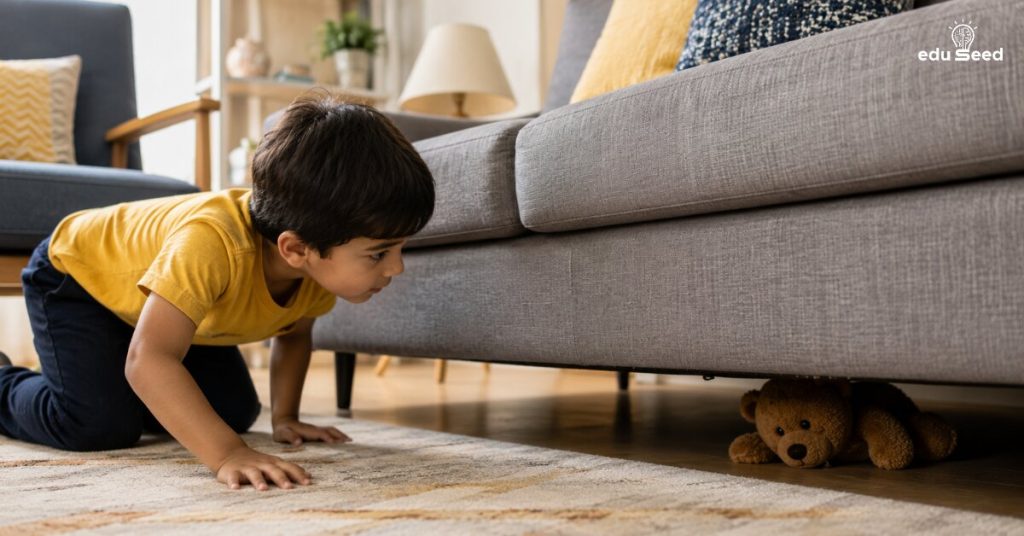
1. Treasure Hunt
Activity
Hide one of your child’s favourite toys or objects somewhere in the house.
Guide your child to find it by giving one clue at a time. As they become more confident, increase the number of clues before they reach the hidden object.
Example Instructions
Go to the living room.
Walk towards the sofa.
Look under the sofa.
Great! You found the teddy bear.
Why This Helps
Encourages children to listen carefully to each clue before taking action.
Improves working memory by helping them remember and follow instructions in the correct order.
Builds confidence and problem-solving skills as they successfully find the hidden object.
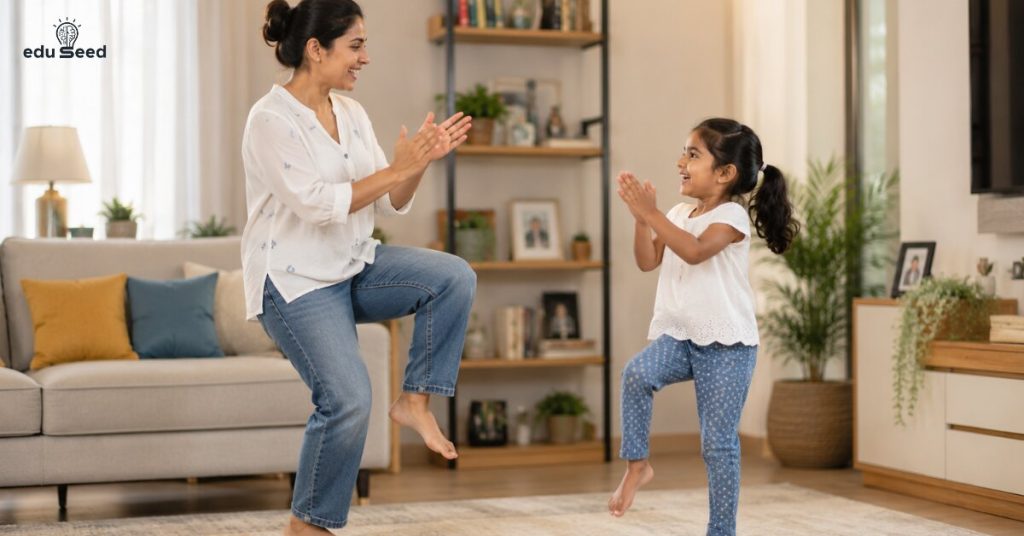
2. Follow the Leader
Activity
Take turns being the leader. Ask your child to copy exactly what you do.
Example Instructions
Clap your hands twice.
Hop three times.
Spin around.
Touch your shoulders.
Why This Helps
Improves observation skills by watching carefully before acting.
Increases attention and concentration.
Encourages children to wait, watch, and respond correctly.
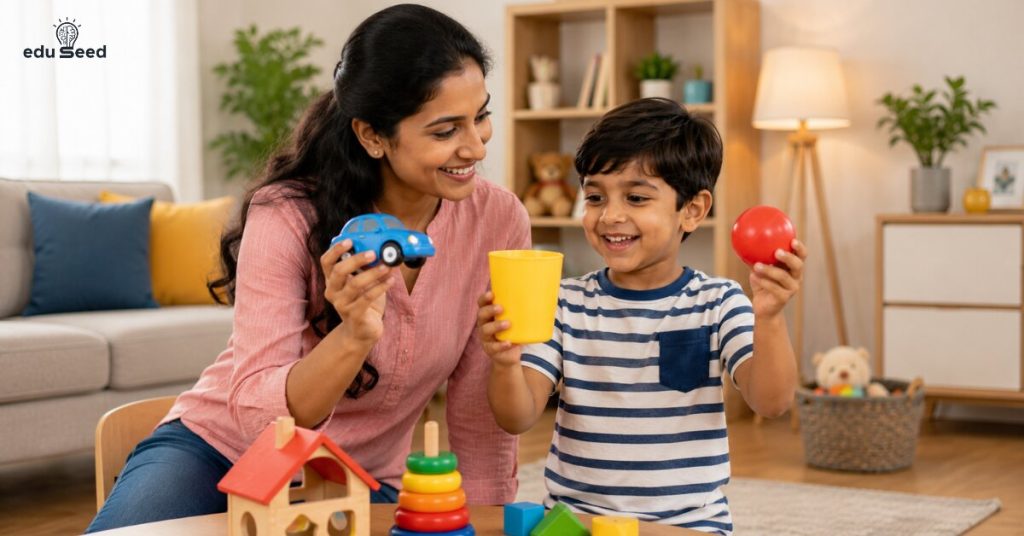
3. Colour Hunt
Activity
Ask your child to find different objects around the house.
Example Instructions
Bring something blue.
Find something soft.
Show me something round.
Why This Helps
Develops listening skills through simple instructions.
Improves vocabulary and object recognition.
Encourages children to think before responding.
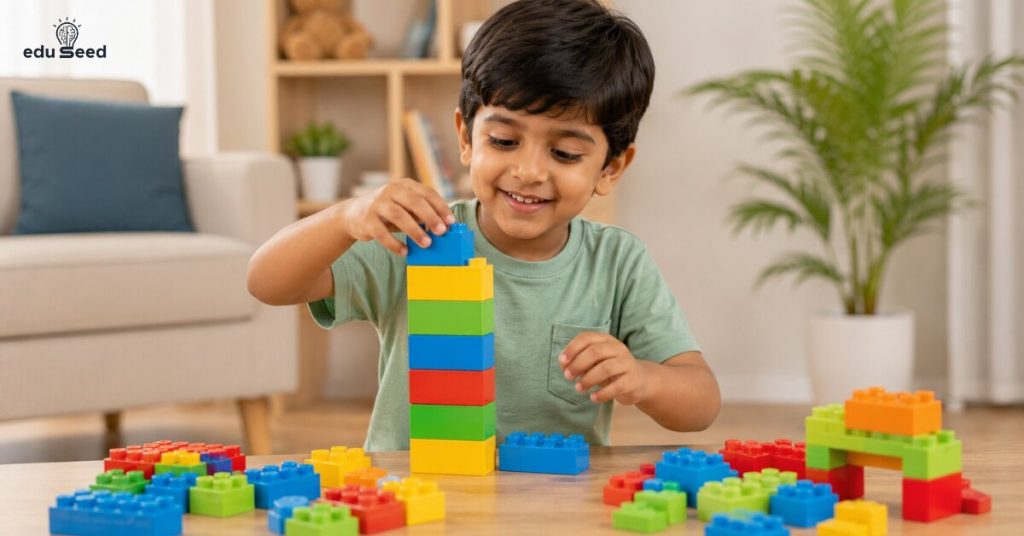
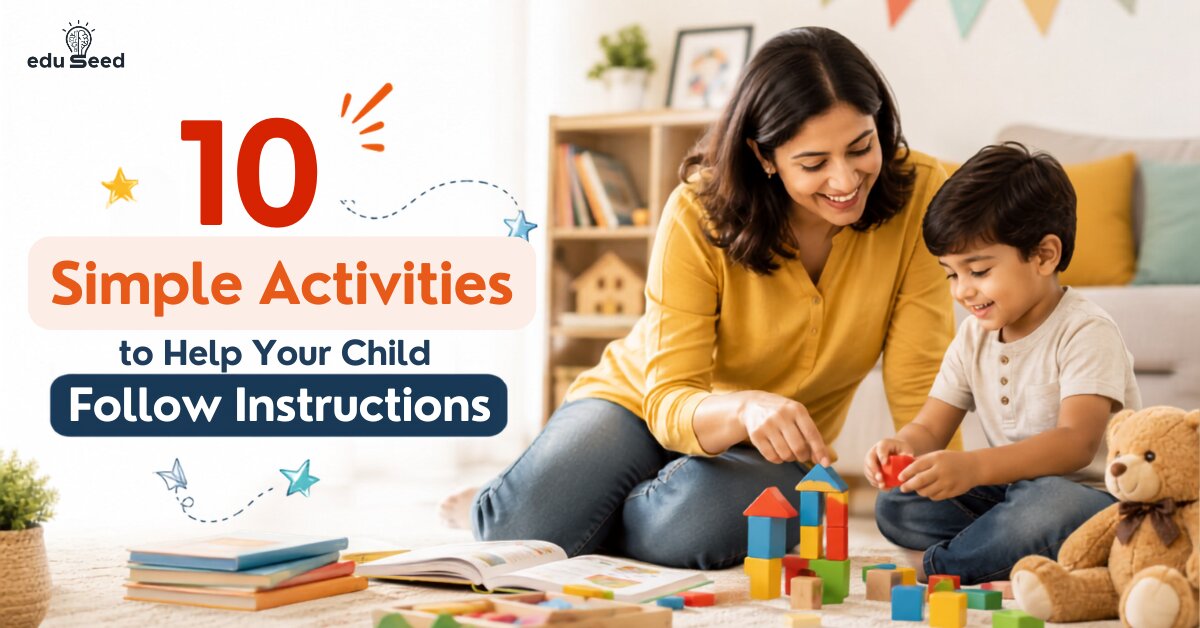
4. Build My Tower
Activity
Use building blocks or LEGO to create simple structures.
Example Instructions
Place the yellow block first.
Put the blue block on top.
Add two red blocks.
Why This Helps
Teaches children to follow instructions in sequence.
Improves focus and patience.
Develops logical thinking and creativity.
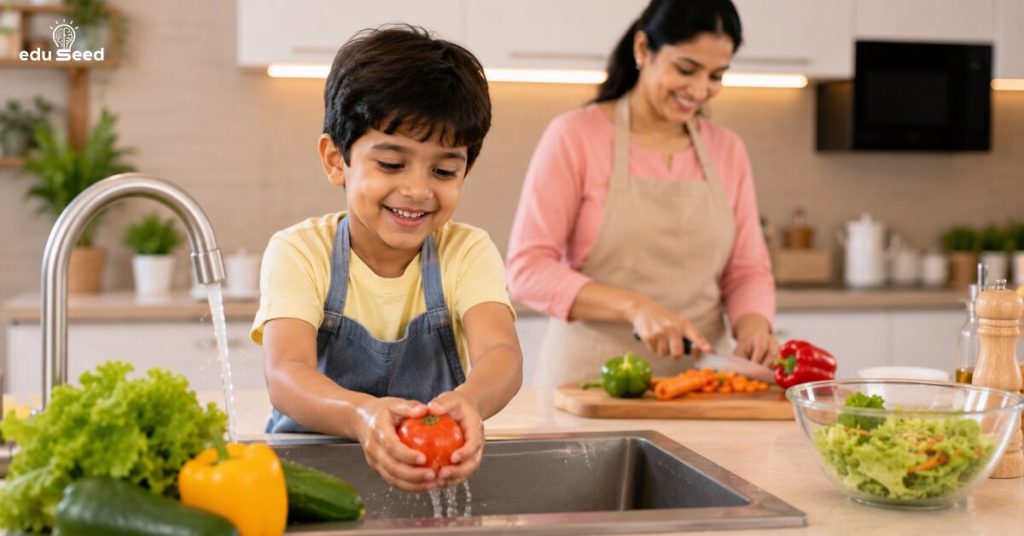
5. Little Kitchen Helper
Activity
Involve your child while preparing meals.
Example Instructions
Wash the tomato.
Place it in the bowl.
Bring me the spoon.
Why This Helps
Encourages independence through everyday tasks.
Builds responsibility from a young age.
Helps children follow instructions in real-life situations.
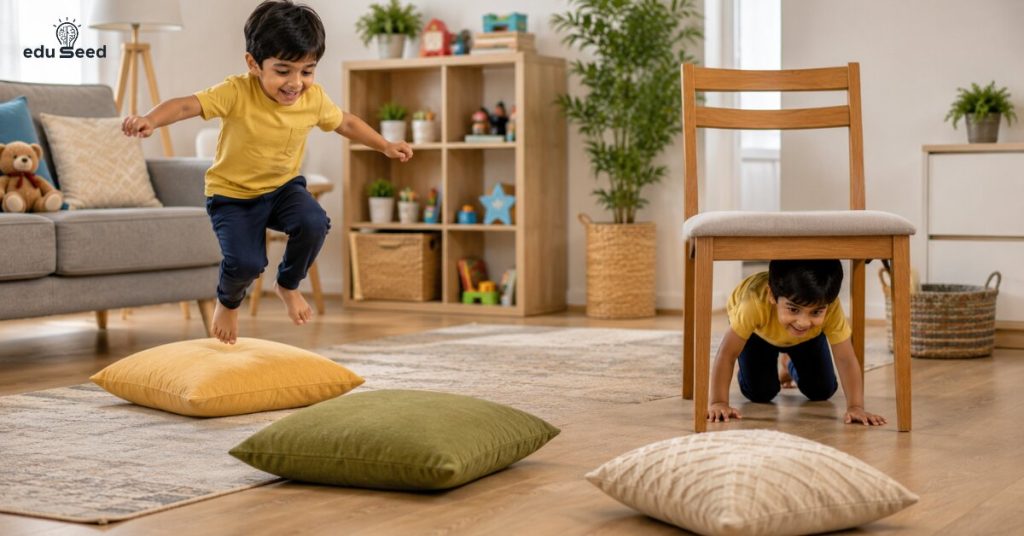
6. Obstacle Adventure
Activity
Create a simple obstacle course using pillows, chairs, and cushions.
Example Instructions
Jump over the pillow.
Crawl under the chair.
Touch the wall and come back.
Why This Helps
Improves body coordination.
Strengthens listening and self-control.
Encourages planning before taking action.
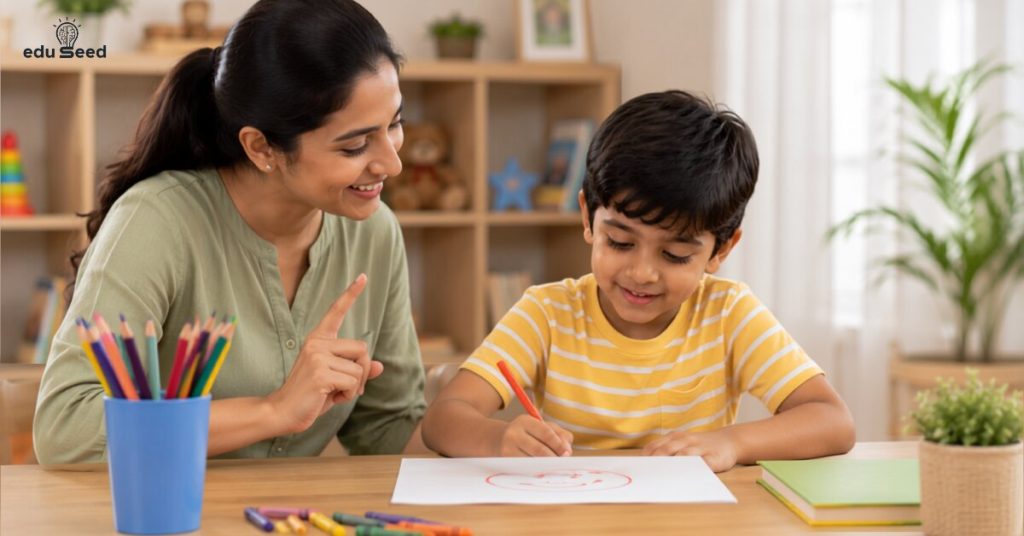
7. Listen and Draw
Activity
Give your child a blank sheet of paper and describe what to draw.
Example Instructions
Draw a big circle.
Add two small eyes.
Draw a smiling mouth.
Why This Helps
Improves listening comprehension.
Develops attention to detail.
Strengthens creativity while following directions.
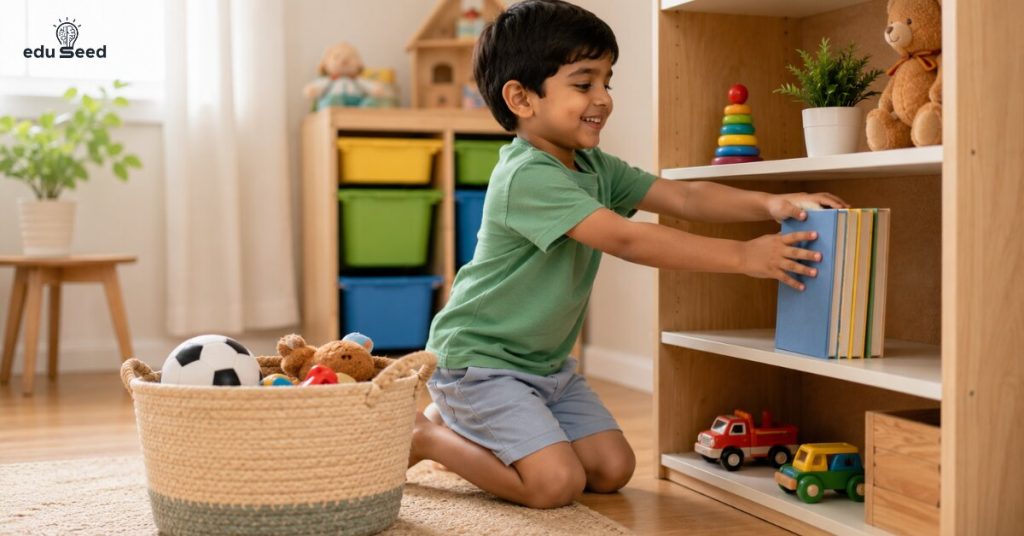
8. Clean-Up Challenge
Activity
Turn cleaning into a fun game by giving one instruction at a time.
Example Instructions
Put the books on the shelf.
Keep the cars in the basket.
Arrange the shoes near the door.
Why This Helps
Builds organisational skills.
Encourages responsibility.
Teaches children to complete tasks step by step.
9. Shopping Helper
Activity
While shopping, ask your child to help find items.
Example Instructions
Bring two bananas.
Find the milk packet.
Put both into the trolley.
Why This Helps
Improves memory and attention.
Builds confidence in everyday situations.
Encourages children to listen carefully before acting.
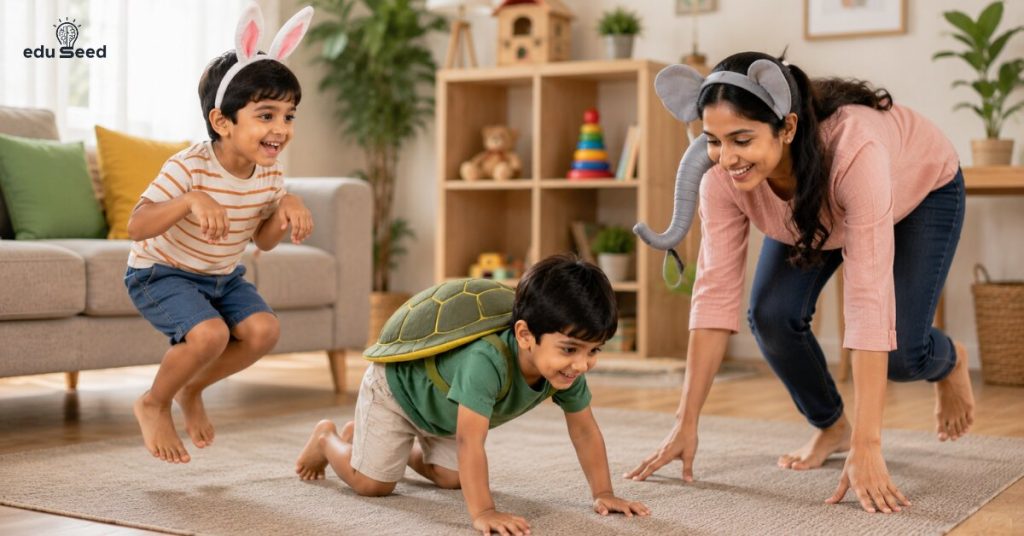
10. Animal Action Game
Activity
Call out different animals and ask your child to act like them.
Example Instructions
Hop like a rabbit.
Walk like an elephant.
Crawl like a turtle.
Why This Helps
Develops listening and reaction skills.
Improves balance and body control.
Makes learning enjoyable through imaginative play.
A Friendly Reminder for Parents
Children don’t learn to follow instructions overnight. Like reading or riding a bicycle, it takes time, patience, and regular practice. The key is to make learning enjoyable rather than turning it into a task.
Even spending 10–15 minutes a day playing simple games like these can make a noticeable difference in your child’s listening skills, attention span, and confidence. Celebrate small successes, encourage their efforts, and remember that every child learns at their own pace.
The most valuable part of these activities isn’t just the learning—it’s the quality time you spend together. Those moments of laughter, encouragement, and teamwork help build strong communication skills and create lasting family memories.
Conclusion
Helping your child become a better listener doesn’t have to be complicated. With a little creativity and consistency, everyday moments can become valuable learning opportunities. From treasure hunts and obstacle courses to drawing games and shopping challenges, each activity encourages children to listen carefully, think before acting, and complete tasks with confidence.
Try introducing one activity each day and notice which games your child enjoys the most. Over time, these small, playful experiences can lead to big improvements in listening, focus, problem-solving, and independence.
Which activity are you excited to try first? We’d love to hear about your family’s favourite games and experiences in the comments!